We make program integrity operational, fully functional, and highly responsive.

We don't just find fraud. We prove it, with 150M+ Medicaid claims and four prime federal databases.

36 fraud vectors. 8 lifecycle stages. $800M to $2B+ in annual exposure mapped to Inspector General findings. The Medicaid integrity platform built to hold MCOs accountable and deliver action-ready oversight intelligence.

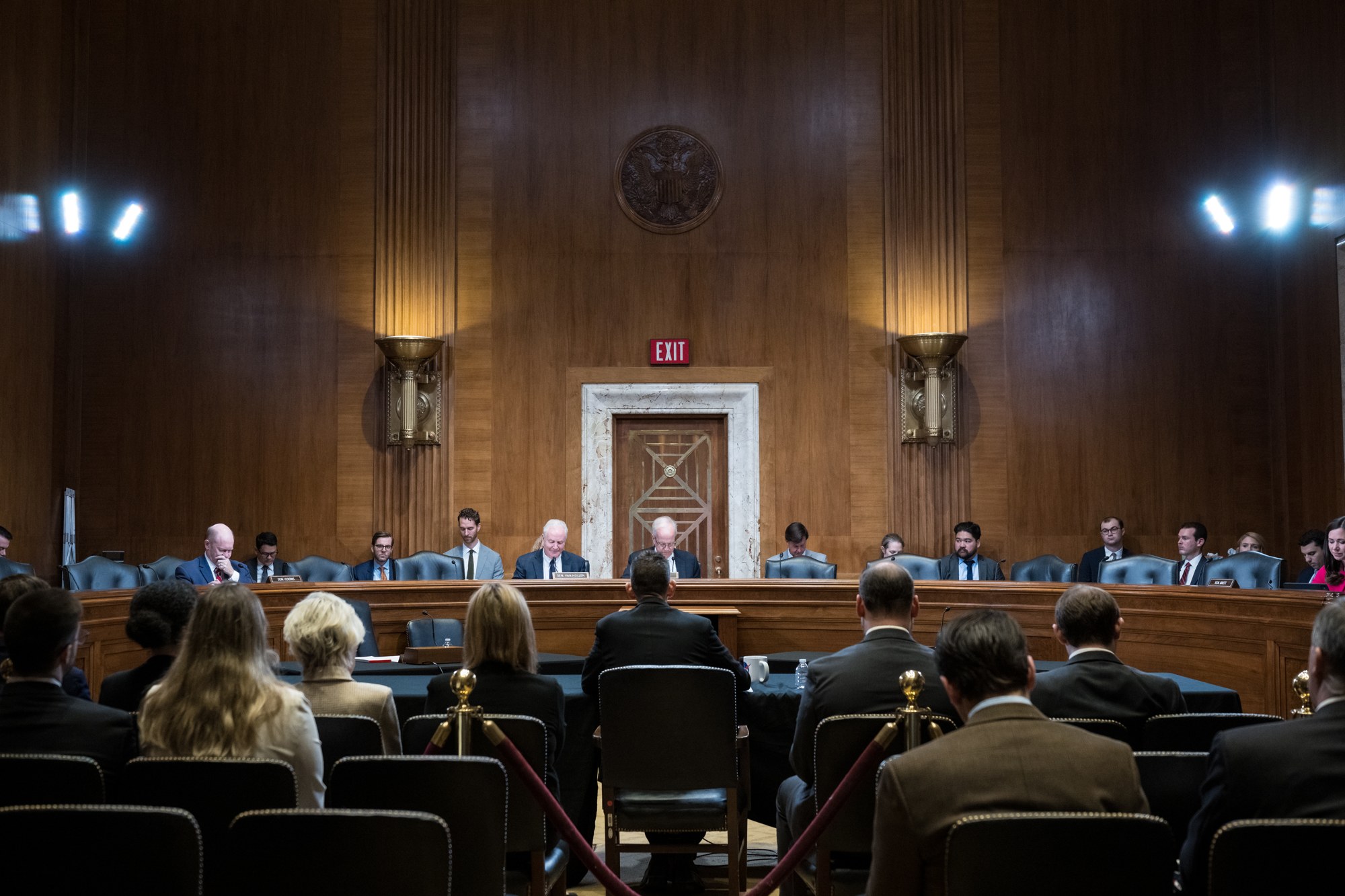
Built for the Rooms Where Oversight Happens United States Senate Appropriations Subcommittee hearing room with senators at the dais and witnesses in the foreground

150M+

Medicaid Claims Integrated

36

Fraud Vectors Mapped to IG Findings

207,638

Federal Coverage Determinations Integrated

$800M to $2B+

Estimated Annual Exposure (Single State)

Protect beneficiaries Support care teams Strengthen oversight Improve recoveries Reduce avoidable harm

If your team holds Medicaid accountable, Sentinel is built for you.

State Medicaid Agencies

Operationalize MCO oversight with audit-ready evidence packs and federal coverage rule cross-references.

For State Government ›

Medicaid Fraud Control Units

Prosecution-grade case files built on federal coverage determinations and MCO denial pattern intelligence.

For MFCUs ›

State Attorneys General

Litigation-ready evidence for MCO accountability actions, false claims recoveries, and parens patriae work.

For Attorneys General ›

Inspectors General

Findings that convert to enforcement, not acknowledgment. Federal and state oversight workflows supported.

For OIGs ›

CMS Center for Program Integrity

Analytics layer aligned to CPI's audit, vulnerability, data analytics, provider compliance, and contractor oversight functions.

For CMS / CPI ›

GAO and Congressional Oversight

Multi-state baseline data, exposure modeling, and audit-ready evidence for oversight hearings and GAO reviews.

For Federal Oversight ›

MMIS Primes

Plug-in managed-care program integrity analytics layer that extends your existing scope and reduces analytic burden.

For MMIS Primes ›

UPIC Primes

Medicaid MCO denial pattern intelligence to complement Medicare program integrity scopes with state-side evidence.

For UPIC Primes ›

Consulting Primes

Evidence-ready workpapers for state Medicaid accountability engagements, audit support, and IG response work.

For Consulting Primes ›

IG audits document the problems. Agency responses acknowledge them. Nobody operationalizes them.

0.1 / MCO concentration

MCOs deny billions, by design.

64 to 67% of all denied Medicaid dollars come from hospital claims that are only 6 to 7% of denial volume.

One Kansas MCO ran a greater than 50% prior authorization denial rate. That concentration isn't random. It's structural. And no one is cross-referencing those denials against federal coverage rules. Until now.

0.2 / Audit-to-action gap

Audits without action.

A recent state IG performance audit named $193M in HCBS payments to potentially inactive beneficiaries, proprietary PA tools creating conflicts of interest, and systemic denial patterns.

Agency response to most findings: "acknowledged, no action taken."

0.3 / Enforcement collapse
$120M MCO overpayments identified, New Mexico HCA Office of Inspector General, May 2024.

Identifying the dollars is not the same as recovering them.

Even in states that find the overpayments, the gap between finding and recovering is structural. The problem isn't a lack of fraud. It's a lack of intelligence infrastructure to prove it and operationalize the recovery. Every other oversight body in this country has the same gap, and almost none of them know what it costs them every year.

Other integrity solutions detect anomalies. Sentinel proves them.

2.1 / Flagship module

The MCO Accountability Engine

When an MCO denies a Medicaid claim, Sentinel cross-references that denial against the actual CMS Coverage Determination that governs the service. If the LCD says covered and the MCO denied it, that is provable non-compliance, not a hunch.

  • 207,638 federal coverage determinations integrated
  • Compliance scorecards for every MCO, grounded in federal evidence
  • Denial pattern tracking by MCO, service category, and CARC code
2.2 / Fraud architecture

The Fraud Prevention Matrix

36 × 8 Fraud vectors across 8 lifecycle stages, every one tied to a documented IG finding.
  • $800M to $2B+ estimated annual exposure
  • 20 specific Kansas IG audit findings cross-referenced
  • 12 solution modules: Application through Legislative Oversight
2.3 / Federal layer

The Federal Validation Layer

Every fraud vector has a federal checkpoint. Sentinel validates patterns against federal ground truth, not just statistical anomalies.

  • 98,186 ICD-10-CM codes. Catches upcoding in real time
  • 8,962+ provider NPIs verified. Flags ghost providers
  • 35M+ PubMed articles. Counters medical-necessity denials
2.4 / Oversight amplifier

The IG Audit Amplifier

We don't just read IG audits. We operationalize them, turning findings into measurable accountability metrics that oversight committees can track quarter by quarter.

  • 20 IG audit findings mapped to specific fraud vectors
  • Quarterly legislative reporting with evidence packages
  • Audit-ready documentation for every finding
  • Hands a state's existing IG team a real enforcement weapon
{ The Sentinel Posture }

Built for the agencies that audit MCOs. Never for the MCOs themselves.

The buyer asymmetry is the moat.

Enterprise PI vendors sell to MCOs. Sentinel sells to the agencies that oversee MCOs. Same data, opposite incentive.

{ The Field }
Enterprise PI Vendors & Generic AI
Enterprise payment-integrity primes, MMIS-bundled PI vendors, generic healthcare AI, and traditional audit firms.
  • Built for MCOs and commercial payers as customers. Structural conflict around state oversight
  • Detect statistical anomalies, with limited federal coverage validation on every denial
  • Sample-based review at 5 to 10 percent coverage on most engagements
  • Reactive. Optimized for post-payment recoupment, not pre-payment intervention
  • No fraud-vector architecture mapped finding-by-finding to state IG audits
  • Generic national data with limited state-regulatory or MCO-contract overlay
{ Sentinel }
The Oversight-Aligned Stack
Built for state OIGs, AG and MFCU teams, state Medicaid PI directors, and legislative oversight committees.
  • Sells to bodies that audit MCOs. Never to MCOs. The buyer asymmetry is the moat.
  • 150M+ Medicaid claims spanning multiple years. Deepest independent claims intelligence in the country
  • Proves federal-rule violations on every denial. Not pattern guessing
  • 100% claims analysis with real-time federal validation against 207,638 LCDs and NCDs
  • Preventive gatekeeper. Stops bad payments before they process
  • 36 fraud vectors mapped finding-by-finding to 20 documented IG audit findings
  • Three-layer architecture: national evidence base, state regulatory overlay, facility-level data
Every state has an Inspector General. Every state has an MFCU. Every state has a legislative oversight committee. None of them has the cross-referenced federal evidence stack required to make MCOs answer for what their own data already proves.
David Thorne Founder & CEO, Sentinel Integrity Group
{ The gap Sentinel was built to close }

Direct to your agency. Sub to your prime. Or a focused diagnostic.

4.1 / Direct path

Direct to Agency

Sentinel as the named program-integrity intelligence vendor to a state OIG, AG MFCU, state Medicaid PI director, or legislative oversight committee. Full seven-module stack deployed against your jurisdiction with quarterly committee reporting.

Best fit: state agencies with statutory data-access authority and a procurement vehicle. Kansas HB 2513 Sec. 32(a) is the active example.

4.2 / Prime sub path

Sub to a Federal or State Prime

The managed-care program-integrity analytics layer for UPIC contractors, federal CMS analytics primes, HHS-OIG support contractors, state MMIS primes, MFCU support primes, and major consulting firms holding state Medicaid engagements. We complement, never compete with, your existing scope.

Best fit: primes that need the state-oversight-of-MCO analytics layer their existing platform does not field. For Prime Contractors page →

4.3 / Diagnostic path

Focused Diagnostic

A fixed-scope 30-to-90-day engagement against one or two named use cases: MCO denial outliers, HCBS ghost-enrollment, deceased capitation, school-based dual-payment, or any of the 34 vector-library priorities. Produces a written findings report, dollar-at-risk estimate, and a path to broader engagement.

Best fit: agencies that want proof before broader procurement, or primes that want a focused subcontract pilot.

Real-time program-integrity dashboard.

See exactly what's happening across every funded program: one view, every MCO, every vector.

Program Integrity Executive Dashboard

Current Month | All States
847
Fraud Alerts
$12.4M
At-Risk Amount
92%
Detection Rate
18
Unique Vectors
Fraud Vectors Detected (by category)
Recovery vs. Prevention Split
Prevention: 65%
Recovery: 35%

Four prime federal databases. One accountability engine.

Sentinel operationalizes the data CMS publishes, turning it into actionable fraud prevention and MCO accountability intelligence.

CMS Coverage Database 207,638 LCD/NCD Records
ICD-10-CM 98,186 Diagnostic Codes
NPI Registry 8,962+ Providers Verified
PubMed 35M+ Clinical Articles
Medicaid Claims 150M+ Rows
IG Audit Data 20 Findings Operationalized

Where Sentinel plugs in: from federal data to evidence-ready outputs.

Six layers, one pipeline. State and prime delivery workflows feed directly into the procurement-ready outputs your team can stand behind.

01
Federal Data Sources
CMS NCDs and LCDs. Medicare contractor determinations. ICD-10-CM. NPI registry. PubMed clinical evidence. IG audit findings.
02
Claims Intelligence
150M+ Medicaid claims integrated across multiple years. CARC and RARC denial coding. Eligibility, capitation, and encounter validation.
03
Fraud Vector Mapping
36 fraud vectors across 8 lifecycle stages. Every vector tied to a documented IG finding. Patent-filed methodology.
04
MCO Accountability
MCO-level scoring on denial concentration, federal coverage rule violations, and contract compliance. Per-MCO scorecards built on federal evidence.
05
State and Prime Delivery
Direct-to-agency workflow for state Medicaid, MFCU, AG, and OIG teams. Subcontract workflow for UPIC, MMIS, and consulting primes.
06
Outputs
Evidence-ready workpapers. Audit-ready documentation. Quarterly oversight reporting. Exposure models. Findings packs traceable to source data.

Founder-led. SME-driven.

David Thorne, Founder and CEO, Sentinel Integrity Group
David Thorne
Founder & CEO, Sentinel Integrity Group

David Thorne is the founder and CEO of Sentinel Integrity Group, a Division of High Value Change. He leads Sentinel's Medicaid managed-care program integrity platform, holding MCOs accountable to the federal coverage rules that govern the services they are paid to deliver. A graduate professor of Digital Transformation at Wichita State University's Executive MBA program, David developed the DDR (Discovery, Diagnostics, Roadmap) methodology, a repeatable digital transformation framework grounded in Christensen's innovation theory. Before founding his current firms, he spent nearly a decade at Boeing as a Program Manager leading M&A integration across billion-dollar business units, earning a Malcolm Baldrige National Quality Award and multiple Wichita Business Journal Innovator of the Year recognitions. He is the author of Stealing Clarity, a forthcoming book on data integrity and the behavioral science of organizational change.

  • 20+ years building and integrating companies across healthcare, fintech, and energy
  • Graduate Professor of Digital Transformation, Wichita State University Executive MBA
  • Former Boeing Program Manager, M&A integration across billion-dollar business units
  • Malcolm Baldrige National Quality Award recipient
  • Author, Stealing Clarity (forthcoming) and the Sentinel 36-Vector Fraud Library
  • Three patents filed in Medicaid program integrity methodology
Defensible findings Audit-ready outputs Procurement-safe delivery Human review on every finding

Sentinel Integrity Group · Medicaid Program Integrity Intelligence

Core Capabilities

Medicaid managed-care program integrity analytics. 36-vector fraud library mapped to Inspector General findings. 8-stage claims lifecycle forensics. Federal coverage rule cross-referencing: NCDs, LCDs, and Medicare contractor determinations applied to Medicaid MCO denial patterns. MCO accountability scoring and audit-ready evidence packs. State-level exposure modeling, $800M to $2B+ annual per state.

Differentiators
  • Only platform that maps MCO denial concentration against federal coverage determinations
  • Three patents filed
  • 150M+ Medicaid claims analyzed across multiple years of federal data
  • Founder-led, SME-driven
  • Outputs are evidence-ready workpapers, not anomaly alerts
  • Built to extend incumbent UPIC, MMIS, and consulting prime workflows, not replace them
Data Assets
  • 150M+ Medicaid claims integrated
  • Four prime federal databases integrated
  • 207,638 federal coverage determinations integrated
  • 36 fraud vectors mapped to IG findings
  • Multi-state baseline coverage including Kansas, Texas, and active pipeline states
Relevant Buyers

State Medicaid Agencies · Medicaid Fraud Control Units · State Attorneys General · State and Federal Inspectors General · CMS Center for Program Integrity · GAO and congressional oversight · MMIS, UPIC, and consulting primes.

Teaming Role

Subcontract to prime contractors as the managed-care program integrity analytics layer. Sentinel extends existing scopes, supports incumbent delivery teams, reduces analytic burden, produces evidence-ready workpapers, and integrates into prime workflows.

Operating Posture
  • Defensible methodology
  • Human review on every finding
  • Audit-ready documentation
  • Role-based access
  • Secure data handling
  • No autonomous determinations. Every output traceable to source.
{ Built on Kansas IG findings. Applicable to every managed-care state. }

Is your oversight infrastructure ready to prove what your MCOs are doing?

40+ states. Hundreds of MCOs. $400+ billion in annual Medicaid spending. The fraud vectors, MCO accountability gaps, and oversight failures Sentinel identified in Kansas are structural. They exist in every managed-care state because the incentive misalignments are identical.

Schedule a 30-Minute Integrity Assessment